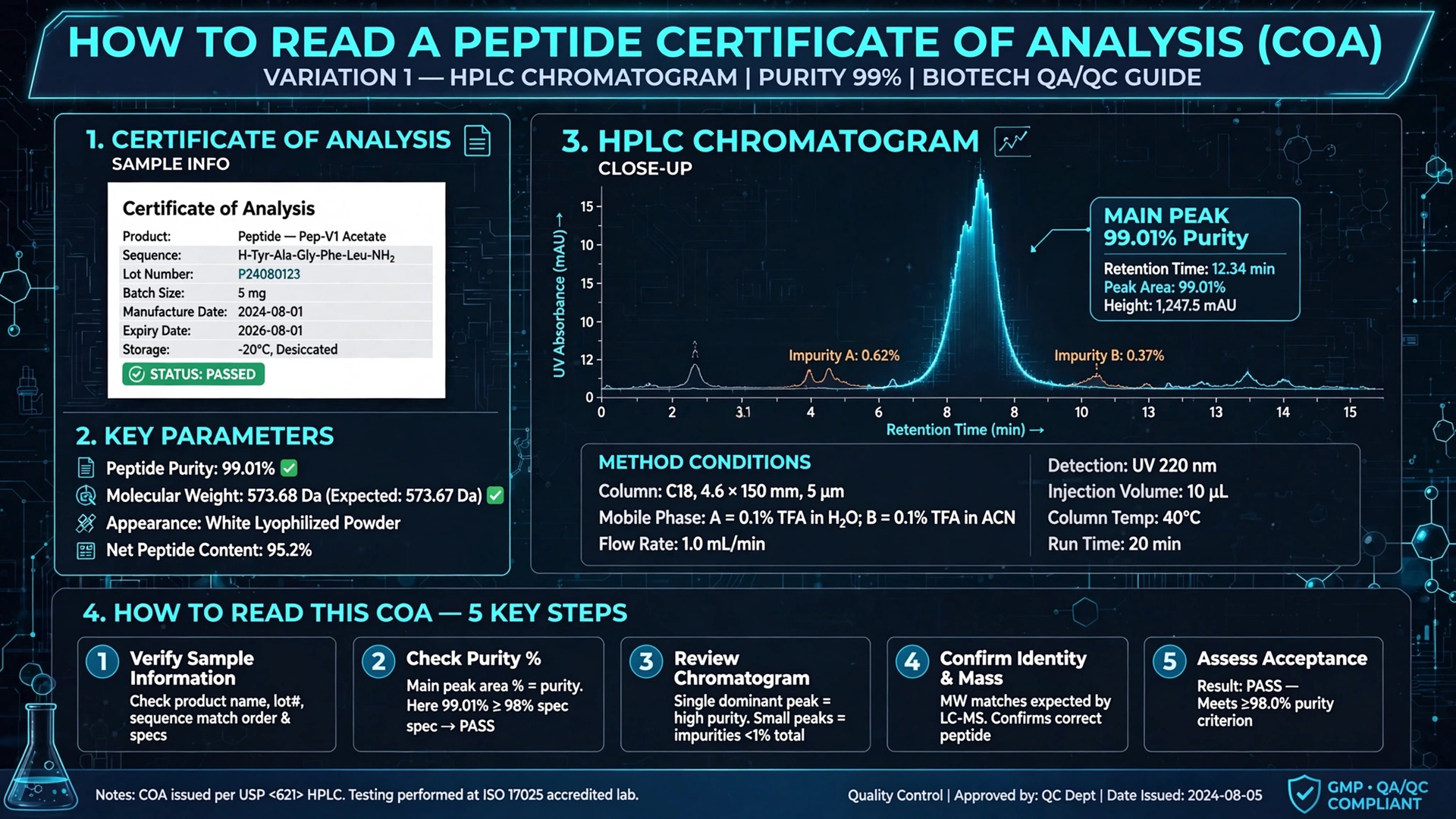
A Certificate of Analysis (COA) is one of the most useful documents a research buyer can review before working with a peptide lot. It summarizes analytical results for a specific batch so you can compare what was tested with what you ordered.
This guide explains the sections you will commonly see on a research peptide COA, how to match a COA to your shipment, and how to interpret results responsibly for laboratory use only.
1. Confirm the COA matches your lot
Start with identifiers, not purity percentages. Check:
- Product or compound name
- Lot / batch number
- Date of analysis or report date
- Any catalog or SKU references used by the supplier
If the lot on the COA does not match the lot associated with your order, treat the document as the wrong reference and locate the correct file before relying on it.
2. Identity vs purity
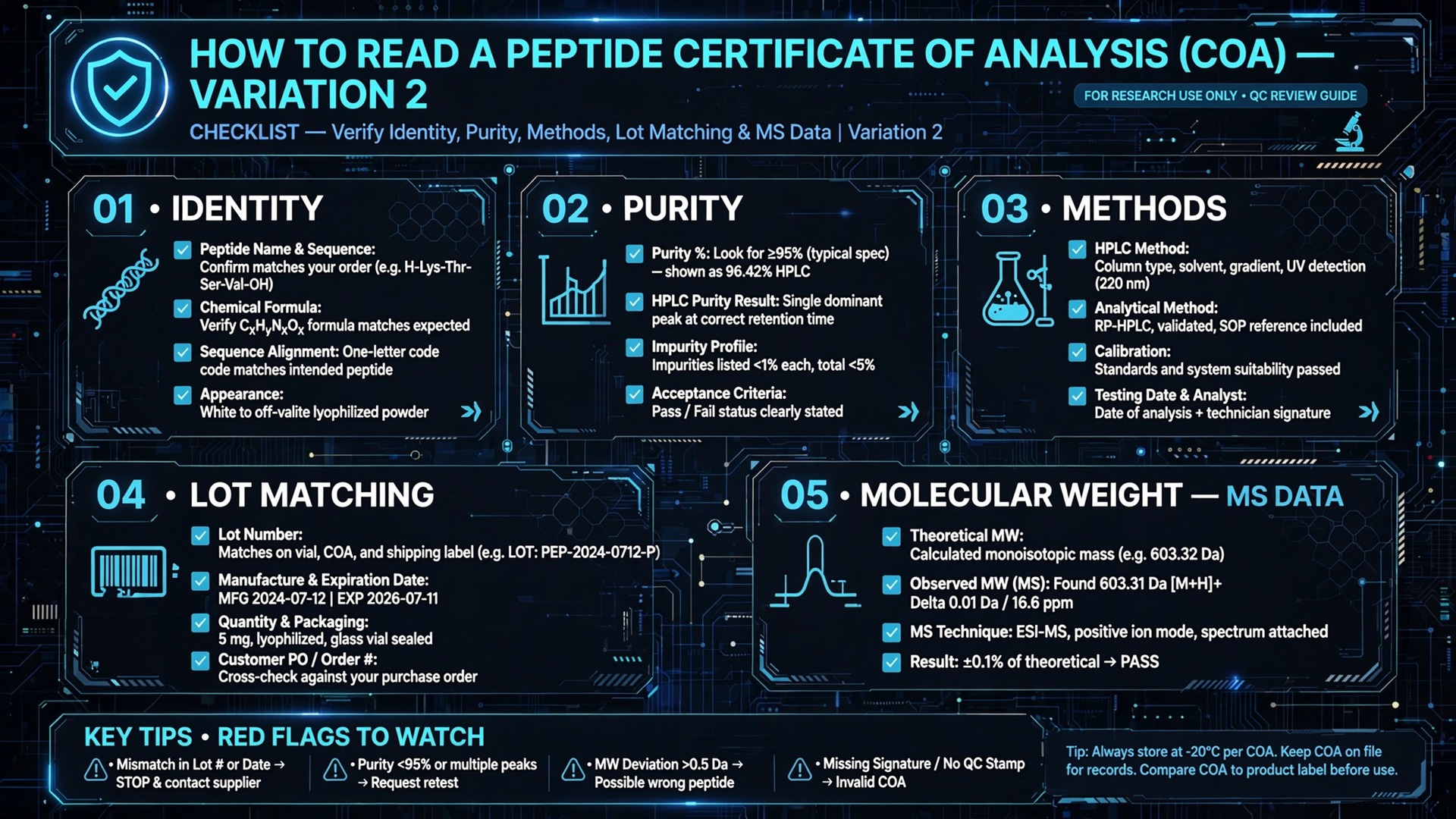
Identity answers: “Does this material correspond to the labeled compound?” Methods often involve chromatographic and/or mass-spectrometric techniques.
Purity answers: “What fraction of the measured signal is consistent with the target peak or reported purity metric?” Purity is useful for research planning, but it is not a guarantee of experimental outcomes.
3. Methods and reporting details
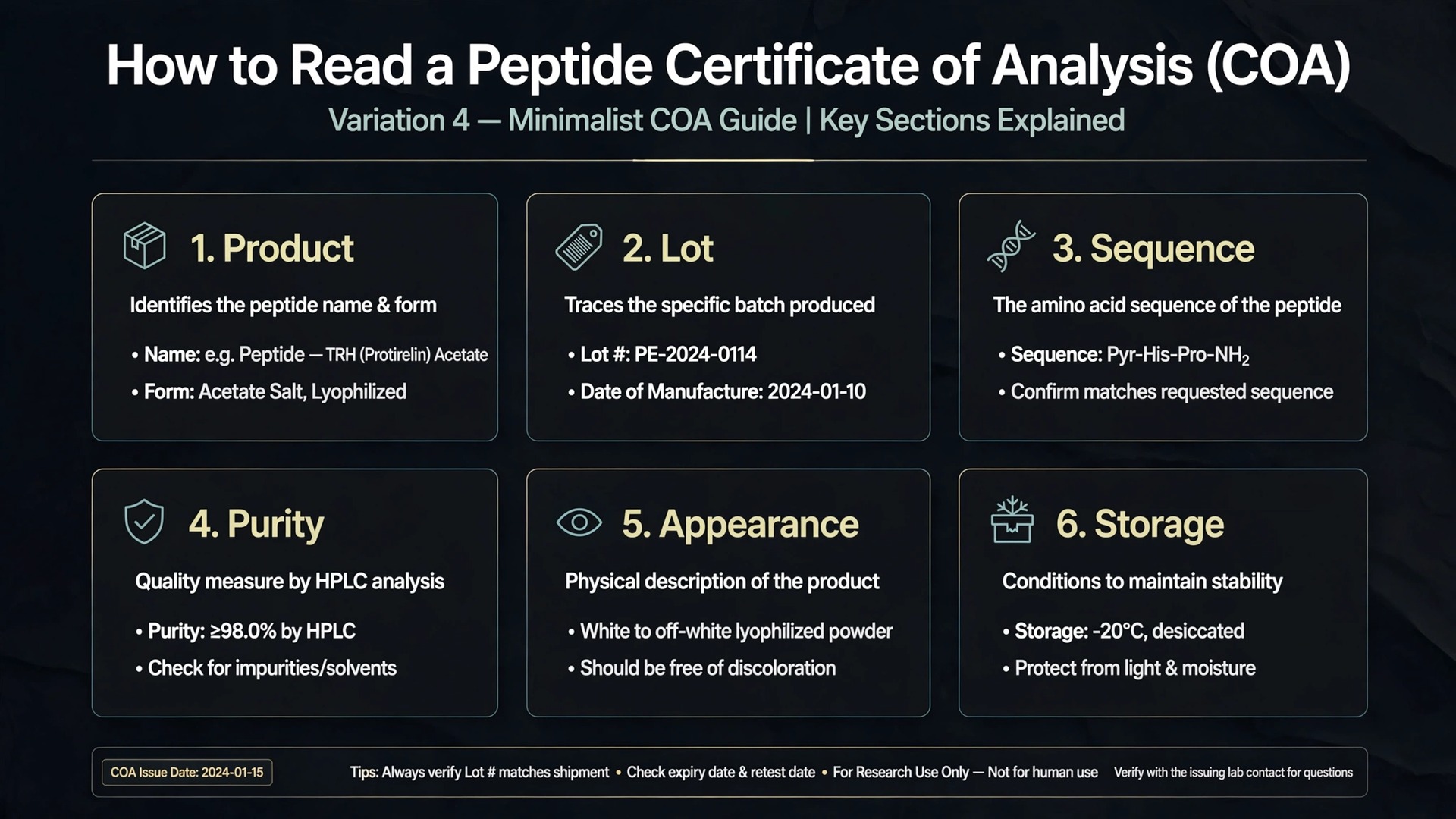
Useful COAs typically note the analytical approach at a high level (for example HPLC and/or MS-related checks). When method notes are present, use them to understand how the lab framed the result—not as a substitute for your own protocol validation.
4. What a COA does not prove
- It does not authorize human or veterinary use
- It does not replace your laboratory’s receiving checks or SOP controls
- It does not guarantee that a material is suitable for every assay design
5. Practical checklist before you start work
- Open the COA linked to your exact lot
- Verify compound name and lot number
- Review identity and purity sections
- Store the PDF with your experiment records
- Escalate mismatches to the supplier before use
At VeriLab, COAs are available from product pages and the COA Library so researchers can review documentation alongside catalog details.